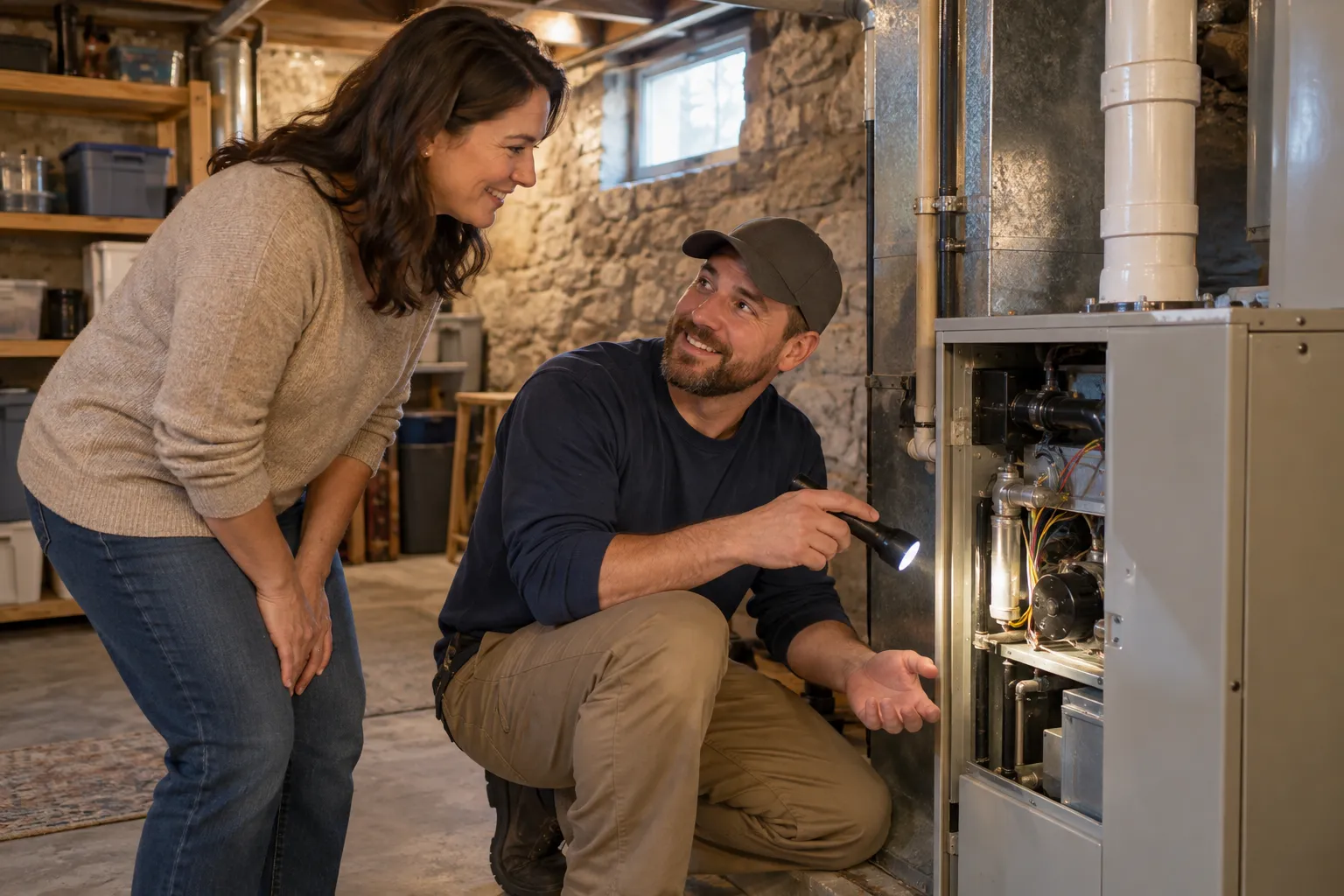
Furnace Repair From Independent Local Providers
A furnace is the machine that heats your home. It burns fuel or uses power to make warm air. Fans then push that air through your vents. When one part fails, the whole system can stop. In Lake Grove, a cold house is more than a bother. Winters are long and snowy, and pipes can freeze when the heat stays off.
Helpedgovernment Heating & Air is a referral service. We do not repair furnaces. We connect you with independent HVAC providers in our network. The provider you reach does the work and gives you the quote. Our job is to cut the searching. Request a callback to ask about provider availability in the Lake Grove area. You can also request an estimate. There is no obligation, and you choose what happens next.
Smell Gas? Leave the House First
A gas leak smells like rotten eggs. If you smell it, go outside right away. Do not flip a light switch. Do not use a lighter. Do not make a phone call inside.
Once you are outside and away from the house, call your gas utility or 911. A provider cannot work on the furnace until the leak is cleared.
Carbon Monoxide Alarm Sounding?
Carbon monoxide, or CO, is a gas you cannot see or smell. A damaged furnace can make it. Headaches, dizziness, and nausea are warning signs.
If your CO alarm goes off, get everyone outside into fresh air. Call 911. Stay out until responders say the home is safe. Do not try to fix this yourself.
No Heat on a Freezing Day
If there is no gas smell and no alarm, you can act on a dead furnace. Cold snaps in our region can freeze pipes in a house with no heat. A frozen pipe can burst, and that costs far more than a furnace repair.
This is why speed matters. Fix it small. Request a callback to check provider availability, and a provider can talk through your symptoms.
Quick Checks Before You Call
A few simple checks take five minutes. Sometimes they solve the problem. Do not open any metal panels on the furnace.
Check the Thermostat
Make sure it is set to "heat." Set the temperature a few degrees above the room. Replace the batteries if the screen is blank.
Check Power and Switches
Look at your breaker panel for a tripped breaker. Find the furnace switch too. It often looks like a regular light switch on a wall near the unit. Make sure it is on.
Check the Filter
A clogged filter can make a furnace shut itself off to stay safe. Slide it out and look. If it is gray and thick with dust, it needs changing.
Check Your Fuel
If you heat with oil or propane, check the tank level. An empty tank is a delivery problem, not a furnace problem.
Signs Your Furnace Needs Repair
Watch for these signals. Any one of them is worth a call.
- The house will not warm up, or warms unevenly.
- The furnace turns on and off in short bursts. Pros call this "short cycling."
- You hear banging, squealing, or grinding.
- The pilot light or burner flame looks yellow instead of blue.
- Your heating bill jumps with no change in use.
- You notice a burning smell that does not fade after the first cold-weather start.
Why Small Problems Grow Fast
A worn part makes the furnace work harder. A hard-working furnace wears out other parts. A dirty sensor today can become a dead blower motor next month.
Catch trouble early and the repair is usually smaller. Wait through a cold week and you may add frozen pipes to the list.
What Happens During a Repair Visit
The provider starts by asking what you saw and heard. Then they look at the furnace, the thermostat, and the vents. They test the parts that most often fail.
Next, they explain what they found in plain words. You should hear the cause, the fix, and the price before work starts. Ask for the quote in writing.
Common Furnace Repairs
Here are parts that fail often, in short words:
- Igniter: the part that lights the burner. It wears out with age.
- Flame sensor: a small rod that checks the flame is lit. Dirt makes it shut the furnace down.
- Blower motor: the fan that pushes warm air through your vents.
- Thermostat: the control that tells the furnace when to run.
- Draft inducer: a small fan that pulls exhaust out of the house.
- Heat exchanger: the metal wall between the flame and your air. A crack here is serious.
Older Homes and Basement Furnaces
Many homes here are older. Some have full basements with stone or block walls. Others are Capes or multi-family buildings with long duct runs.
Damp basement air can rust parts. Old ducts can leak heat. Tell the provider about your home type so they can plan for it.
Repair or Replace Your Furnace?
A repair makes sense when the part is small and the furnace is not very old. Replacement may make more sense when the furnace is near the end of its life, breaks often, or has a cracked heat exchanger.
A common rule of thumb is to weigh the repair price against the price of a new unit. Ask the provider to explain both choices.
Searching for Furnace Replacement Near Me
If you type "furnace replacement near me" into a search box, you get a long list. Helpedgovernment Heating & Air cuts that list down. We connect you with an independent HVAC service provider in our network. That provider gives you a written quote for a new unit.
You can compare it with a repair quote before you decide.
Questions to Ask the Provider
A good provider is happy to answer these:
- What is wrong, and what caused it?
- What does the repair cost, in writing?
- Is the part under warranty, and for how long?
- Is the repair safe to do now, or should I replace the unit?
- How can I avoid this problem next winter?
Who Does the Work
Helpedgovernment Heating & Air is a referral service. Providers do the work. They set their own prices, schedules, and terms. We do not repair, install, or inspect anything.
What we do is simple. You tell us what is going on. We route you to a provider in our network who handles heating and cooling in your area.
Keep the Trouble From Coming Back
Change your filter every one to three months in winter. Keep vents clear of rugs and boxes. Keep snow and ice away from outdoor vents and intakes.
Ask a provider for a yearly check before cold weather arrives. Small fixes in fall beat big surprises in January.
What's Included
Heat Not Working
A provider checks why your furnace will not start, blow warm air, or stay on.
Strange Noises
Banging, squealing, or rattling often points to a worn part that needs a look.
Short Cycling
If the furnace turns on and off too fast, a provider can find the cause.
Written Quotes
Ask the provider to explain the problem, the fix, and the price in writing before work begins.
Typical Furnace Repair Costs
Prices vary by home, brand, part, and fuel type. These are typical U.S. ranges only. Always ask the provider for a written quote before any work starts.
| Item | Typical range | Notes |
|---|---|---|
| Service visit and diagnosis | $75 – $200 | Often applied toward the repair; ask the provider |
| Igniter or flame sensor | $125 – $400 | Common, small parts |
| Thermostat replacement | $100 – $350 | Smart models cost more |
| Blower motor | $400 – $1,500 | Price depends on motor type |
| Draft inducer motor | $350 – $900 | Needed to vent exhaust safely |
| Furnace replacement | $3,800 – $10,000 | Depends on size, efficiency, and ductwork |
How It Works
Tell Us the Problem
Request a callback or send the request form. Say what the furnace is doing and what you have already checked.
We Route Your Request
Your request goes to an independent provider in our network who serves your area.
Talk With the Provider
The provider asks questions, explains next steps, and shares availability and pricing details.
Review the Quote, Then Decide
Get the fix and the price in writing. You choose whether to go ahead.
Why Call Helpedgovernment Heating & Air
Less Searching, Faster Connection
Skip the long list of search results. We route your request to a provider in our network.
Plain Answers
Trade terms get short definitions, so you know what you are agreeing to.
Clear Roles
We refer. Independent providers do the work and set their own prices.
No Obligation
Ask for an estimate and compare. You decide what happens next.
Other Services
Need furnace repair in Lake Grove?
Heating or cooling acting up? Reach out and we will point you to an independent local provider. Ask questions first. Request an estimate with no obligation.
No obligationFurnace Repair FAQ
- Why is my furnace running but not heating my house?
- Common causes include a dirty filter, a bad thermostat setting, a worn igniter, or a failing blower fan. Check the filter and thermostat first. If heat is still weak, ask a provider to take a look.
- Is it safe to use my furnace if I smell something odd?
- A dusty smell on the first cold day is common. A gas smell or a sudden burning smell is not. Leave the house for gas, and call your gas utility or 911.
- How do I know if I need furnace repair or replacement?
- Age, repair history, and the type of problem all matter. A provider can compare a repair quote with a replacement quote so you can decide with clear numbers.
Request a callback
Heating or cooling acting up? Reach out and we will point you to an independent local provider. Ask questions first. Request an estimate with no obligation.
No obligation